
Rural property security is a different challenge than protecting a suburban home. Long driveways, limited lighting, vast acreage, remote outbuildings, unreliable internet, and the real possibility that help is 20+ minutes away — these factors demand a security system designed specifically for the environment, not a box from a big-box store.
📋 Table of Contents
Unique Challenges of Rural Security
- Coverage area — Entry points may be hundreds of feet from the main structure. A single camera doesn’t cut it.
- No ambient lighting — True darkness. No streetlights, no neighboring businesses. Night vision must perform in complete darkness.
- Limited connectivity — Internet at a barn or gate may not exist. Cable runs may span distances that require planning to avoid voltage drop.
- Wildlife triggering alerts — Deer, raccoons, birds create constant false motion events if detection isn’t configured properly.
- Response time — Evidence quality matters more when law enforcement response is 20–30 minutes. You need footage good enough to identify vehicles, faces, and license plates.
Camera Types That Work Best Rurally
Turret cameras are the go-to for buildings, barns, and entry points with mounting surfaces. Low-profile, weather-resistant, and versatile for both wide-area and targeted coverage.
Bullet cameras excel for long driveway coverage. Their narrower field of view and longer IR range make them better suited for capturing vehicle details at 60–100 foot distances than wide-angle cameras.
Varifocal cameras are ideal when you’re not certain of the exact coverage distance needed at installation. Adjustable focal length lets you fine-tune coverage on-site to match actual driveway lengths and gate distances.
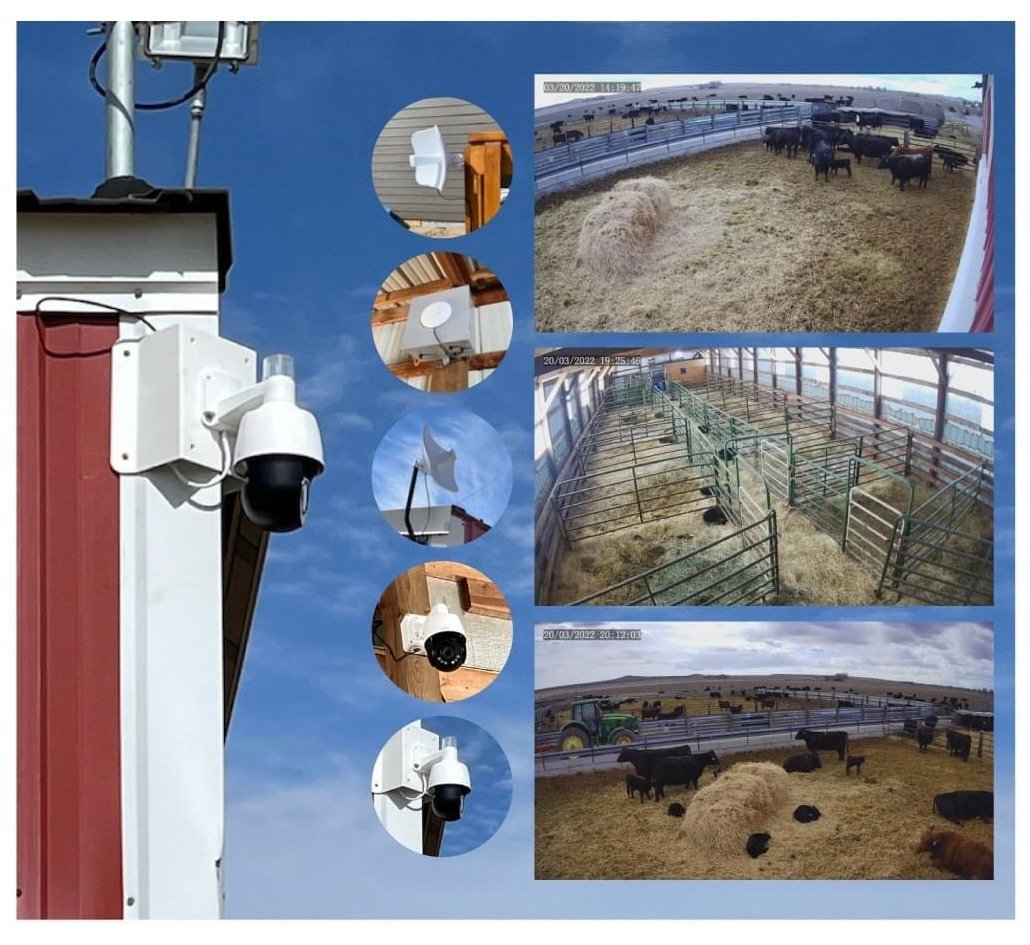
PTZ cameras can cover large open areas when a fixed camera can’t capture the full range. Auto-tracking PTZ cameras follow motion automatically — useful for wide pastures or large parking areas.
Night Vision Requirements
IR range: Advertised IR ranges are optimistic. For a driveway gate 60 feet from the camera, look for cameras rated 80–100 feet IR range minimum. Add 50% to whatever distance you actually need to cover.
ISP quality: Advanced ISP technology is the biggest factor separating cameras that produce usable rural night footage from those that don’t. ISP cameras reduce digital grain, manage IR reflection, and maintain detail at the edges of the IR illumination zone where basic cameras lose all usable detail.
Smart detection: Without proper motion zone configuration, deer, cattle, wind-blown trees, and passing vehicles on distant roads will fill your storage with useless recordings. Use cameras with smart detection that can distinguish human/vehicle motion from general motion events.
Power and Connectivity Solutions
Gate or driveway entry (200–500 feet from house):
- Run Cat6 in buried conduit from the main structure. PoE cameras run up to 300 feet on Cat6; longer runs need a PoE extender or switch at the midpoint.
- Alternatively, run power to a local switch and use a wireless bridge for data if trenching isn’t feasible.
Remote outbuildings with no power:
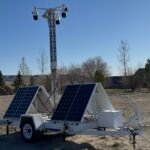
- Solar-powered cameras or solar panel + battery systems with cellular modem for connectivity.
- LTE/5G cellular cameras don’t require internet infrastructure at the camera location.
Barns and secondary structures with power:
- Local NVR or switch at the structure with wireless bridge back to main NVR. Point-to-point wireless bridges can span 1,000+ feet reliably.
Voltage drop is critical on long PoE runs. Use Cat6 (not Cat5e) for long runs, and consider a PoE injector or midspan for extra safety margin.
Long-Range Coverage Strategies
- Chokepoint coverage first — Gate entrances and driveway entry points are your highest-priority locations. Anyone accessing your property must pass through these.
- Elevation advantage — Mounting cameras on elevated platforms, barn peaks, or hill lines dramatically extends coverage range for open areas.
- IR overlap for driveways — Use two cameras on long driveways: one at the gate for entry identification, one closer to the structure for additional coverage.
Local Storage and Redundancy
- Secure the NVR physically — Inside a locked cabinet, or in a location not obvious to an intruder.
- Use surveillance-rated hard drives — Our WD Purple HDDs are purpose-built for 24/7 recording in NVR systems.
- Size storage for extended retention — 30 days of retention is a reasonable target for rural properties where incidents may not be discovered immediately.
Use our Security Camera Storage Calculator to determine how much storage you need.
Recommended System Configurations
Small rural property (1–10 acres, 4 camera coverage):
- 4-Channel 4MP Turret Camera Kit — Complete starter system with NVR and cables
Medium rural property (10–50 acres, 8+ cameras):
- 8-Channel 4K Turret Camera Kit — Higher resolution for larger coverage areas
- Supplemental 4-Pack cameras for outbuilding coverage
Large farm or commercial rural property:
A professional system design is strongly recommended. Roylance Consulting can design a system matched to your specific property and coverage goals.
Frequently Asked Questions
What camera is best for a long driveway?
A bullet or varifocal camera with at least 80-foot IR range and ISP-enhanced night vision. Mount it at the entry point aimed down the driveway approach. Avoid wide-angle cameras — at driveway distances, you need the focal length to capture license plate and facial detail.
How do I get security cameras working at a barn with no internet?
Two main options: (1) Run a wired ethernet connection from your main structure using buried conduit and a PoE switch at the barn. (2) Use a point-to-point wireless bridge — these reliably span 500–1,000 feet and don’t require internet at the barn.
How do I stop deer and wildlife from triggering my cameras?
Configure motion detection zones to exclude areas where wildlife is likely to pass (edges of frame, tree lines). Use cameras with smart detection that can classify human vs. general motion. Position cameras on driveways and entry points specifically — not pointed at open pasture.
Do solar security cameras work in rural areas?
Yes — and they’re often the best solution for gates and remote structures without power. Quality solar cameras paired with adequate battery storage function reliably year-round in most US climates.
How much storage do I need for a 6-camera rural system?
At 4MP resolution with 24/7 recording on 6 cameras targeting 30 days of retention, plan for 4–6TB of storage. Use our Security Camera Storage Calculator for a precise estimate. Always use surveillance-rated HDDs for reliable continuous recording.